After a stainless steel part is manufactured, an important additional step is often required to improve its resistance to rust and corrosion. This critical step is called passivation, a process that helps protect metal components and extend their service life.
What Is Passivation?
Passivation is a metal finishing process that enhances the corrosion resistance of stainless steel and other metals. During the passivation process, parts are thoroughly cleaned and then immersed in an acidic passivating bath. This treatment removes surface contaminants and promotes the formation of a protective oxide layer.
Why Is Passivation Done?
After manufacturing, stainless steel parts may retain grease, oils, or free iron particles on their surface. These contaminants can interfere with the formation of the natural oxide layer that protects stainless steel from corrosion.
Without passivation, free iron on the surface can lead to rust, staining, or reduced performance over time. Passivation removes these contaminants, allowing the protective oxide layer to form properly. As a result, the metal surface becomes cleaner, more corrosion-resistant, and better prepared for priming, painting, or final assembly.
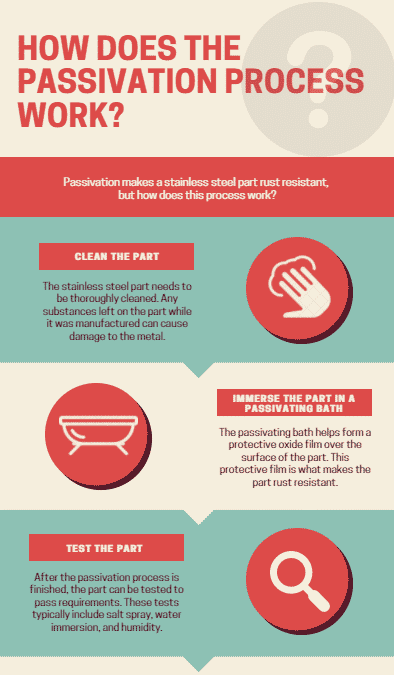
How Is the Passivation Process Performed?
The stainless steel passivation process typically occurs in two main steps:
Step 1: Cleaning
The part is thoroughly cleaned to remove oils, dirt, and other substances introduced during manufacturing. This step is essential, as surface contamination can compromise the effectiveness of passivation.
Step 2: Acid Passivation
After cleaning, the steel is immersed in an acidic passivating bath. Several methods may be used, depending on application requirements:
- Nitric acid passivation
- Nitric acid with sodium dichromate passivation
- Citric acid passivation
The passivating bath removes surface iron and encourages the growth of a passive oxide film, which gives stainless steel its rust-resistant properties. Once the part meets required testing standards, the passivation process is complete.
Testing and Quality Assurance
Passivated parts are often tested to ensure performance and corrosion resistance. Common tests include:
- Salt spray testing
- Water immersion testing
- Humidity testing
These tests confirm that the protective oxide layer has formed correctly and that the part is ready for use.
Improve Performance with Passivation
If you’re looking to enhance the appearance, durability, and corrosion resistance of stainless steel components, passivation is an effective solution. It helps ensure longer-lasting parts that perform reliably in demanding environments.
Contact Electro Chemical Finishing to learn more about passivation and how functional finishing processes can improve your product’s performance.